
Sound Experience
An Adaptive Sound Experience
for Calm and Focus
An adaptive sound experience that explores how the body responds to tones, rhythm, and ambient layers — then uses those signals to suggest a more personal path toward calm and focus.
Sound Experience / Bio-Response Concept / 2024 / Concept Creator & Experience Designer
Context
MindTune began with a simple observation: people do not respond to sound in the same way. A tone that calms one person may feel distracting to another. The concept explores whether short, controlled sound moments — listened to through headphones while basic wearable signals are observed — could help reveal a more personal relationship between sound, calm, focus, and emotional state.
The Challenge
The challenge was to frame a sensitive wellbeing idea without overclaiming. MindTune needed to feel innovative and meaningful, while staying away from medical diagnosis, therapy claims, or pseudo-scientific language. The experience had to be positioned as an exploratory personal tuning system: one that observes body-response patterns and suggests sound directions, rather than claiming to read or fix the mind.
The Role
Daha shaped MindTune as a concept at the intersection of creative technology, sound-led experience design, product thinking, and human-centered wellbeing. The role included defining the core experience, clarifying the emotional promise, setting boundaries around responsible language, and translating an abstract idea — how the body reacts to sound — into a product story that could be visualized, prototyped, and developed further.
The Insight
The central insight is that sound is deeply personal. Calm is not one universal playlist or one generic meditation track. It can be shaped by sensitivity, rhythm, memory, body state, and context. By observing how a person responds to different tones and sound textures, MindTune proposes a more adaptive way to design audio experiences around the individual.
The Strategy
The strategy is to make the experience feel like personal calibration rather than medical assessment. The product flow should be simple: wear headphones, connect a smartwatch, listen to short sound sessions, observe response patterns, and generate a personalized sound direction. The visual and verbal system should feel calm, premium, and trustworthy — more like a personal tuning ritual than a clinical test.
The Execution
The concept is structured around short listening sessions. Each sound moment may last around 30 seconds and can include tones, ambient layers, subtle rhythm, or background sound. While the user listens, wearable signals such as pulse or heart-rate response can be observed to notice patterns of sensitivity or calm. These patterns can then inform a personalized sound profile, helping the user discover audio combinations designed to support focus, calm, or emotional grounding.
Evidence / Visual System
MindTune is a sound and bio-response concept ahead of a built interface — the plates below are placeheld deliberately rather than filled with stand-in imagery.
Visual evidence pending — concept plates are marked clearly.
[Add visual evidence: A concept view of how a smartwatch and headphones might pair to run a MindTune session together.]
Smartwatch / Headphone Pairing Concept
Concept stage — pairing concept pending.
[Add visual evidence: A flow showing how a short, guided sound calibration session might move a listener through a sequence of tones.]
Sound Calibration Flow
Concept stage — calibration flow pending.
[Add visual evidence: An interface direction for showing how a person is responding to a tone in the moment, without clinical framing.]
Tone-Response Interface
Concept stage — interface pending.
[Add visual evidence: A screen concept for the personalized sound profile a session might generate for someone.]
Personalized Sound Profile Screen
Concept stage — profile screen pending.
[Add visual evidence: A journey diagram mapping the steps from putting on headphones to receiving a personalized sound direction.]
Experience Journey Diagram
Concept stage — journey diagram pending.
[Add visual evidence: A diagram outlining how bio-response data might be handled responsibly and kept private throughout the experience.]
Privacy-Conscious Data Flow
Concept stage — data flow diagram pending.
Outcome / Potential Impact
- MindTune is designed to demonstrate how sound, wearable data, and experience design could work together to create more personal wellbeing tools. Rather than offering a universal solution, it positions calm and focus as adaptive experiences — shaped by the individual's own responses. Future development could explore prototype testing, sound libraries, smartwatch integration, and privacy-conscious data handling.
Tools / Disciplines
What This Proves
MindTune shows Daha's ability to turn an abstract human insight into a responsible innovation concept. It connects emotional sensitivity, product experience, sound design, wearable technology, and careful communication — proving that his creative direction can move beyond visual design into human-centered systems and future-facing product thinking.
More Case Studies

Personal Brand & Portfolio Platform 2026
Art of DahaFrom Artist Shopto Creative Leadership Platform
Rebuilding a personal website into a content-managed platform — information architecture, a custom CMS, and case-study-driven storytelling — built to argue for senior creative and innovation leadership, not just display it.
- Role
- Creative Director, Designer & Builder
Product Concept 2024
SpeakUpAn AI English-Speaking CompanionDesigned to Be Worn With Pride
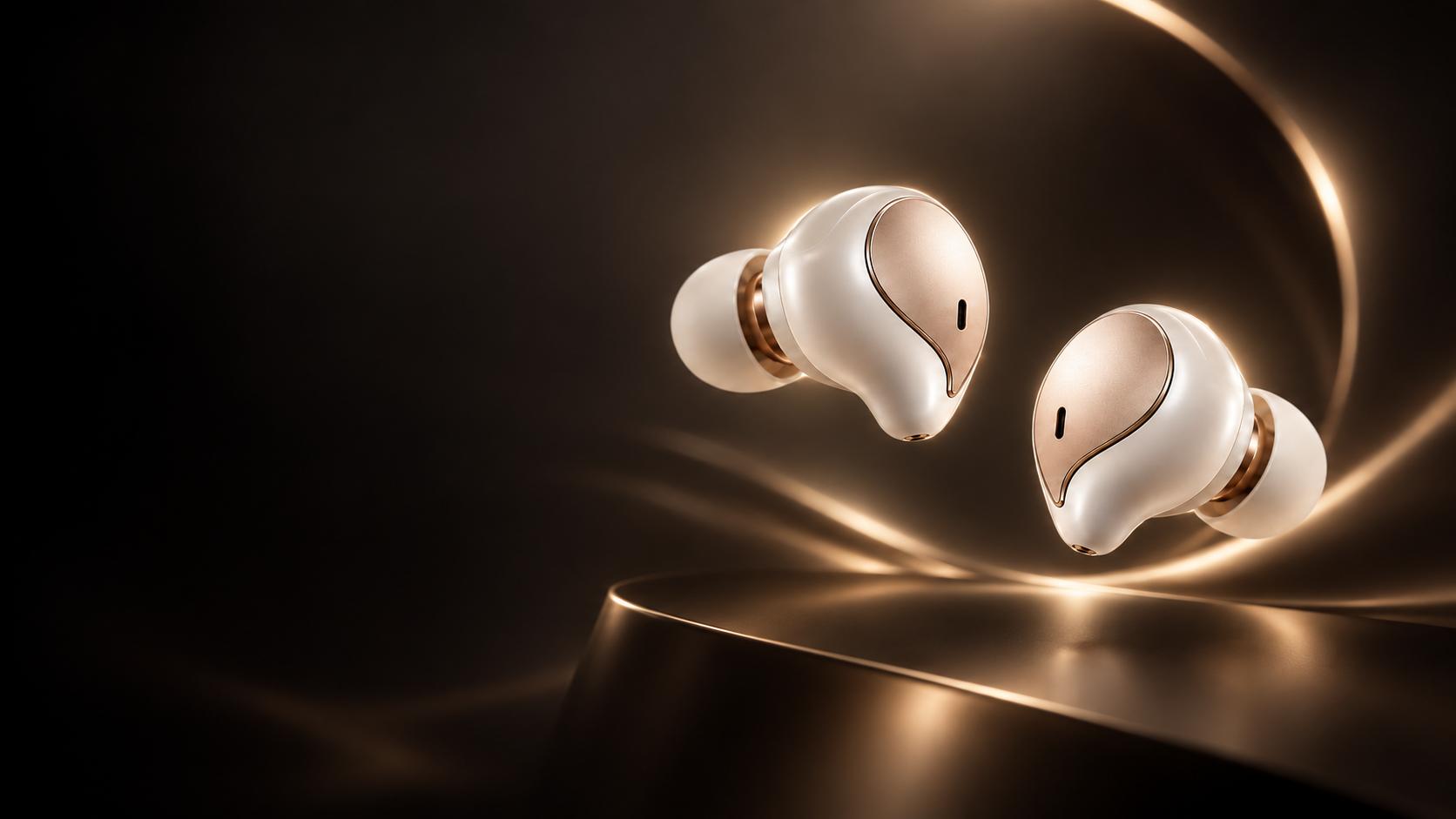
A premium AI English-speaking companion — a small in-ear device paired with a companion app — designed to help people build spoken English confidence through guided practice, supportive correction, and progress feedback.
- Role
- Concept Creator & Product Designer